Episode Transcript
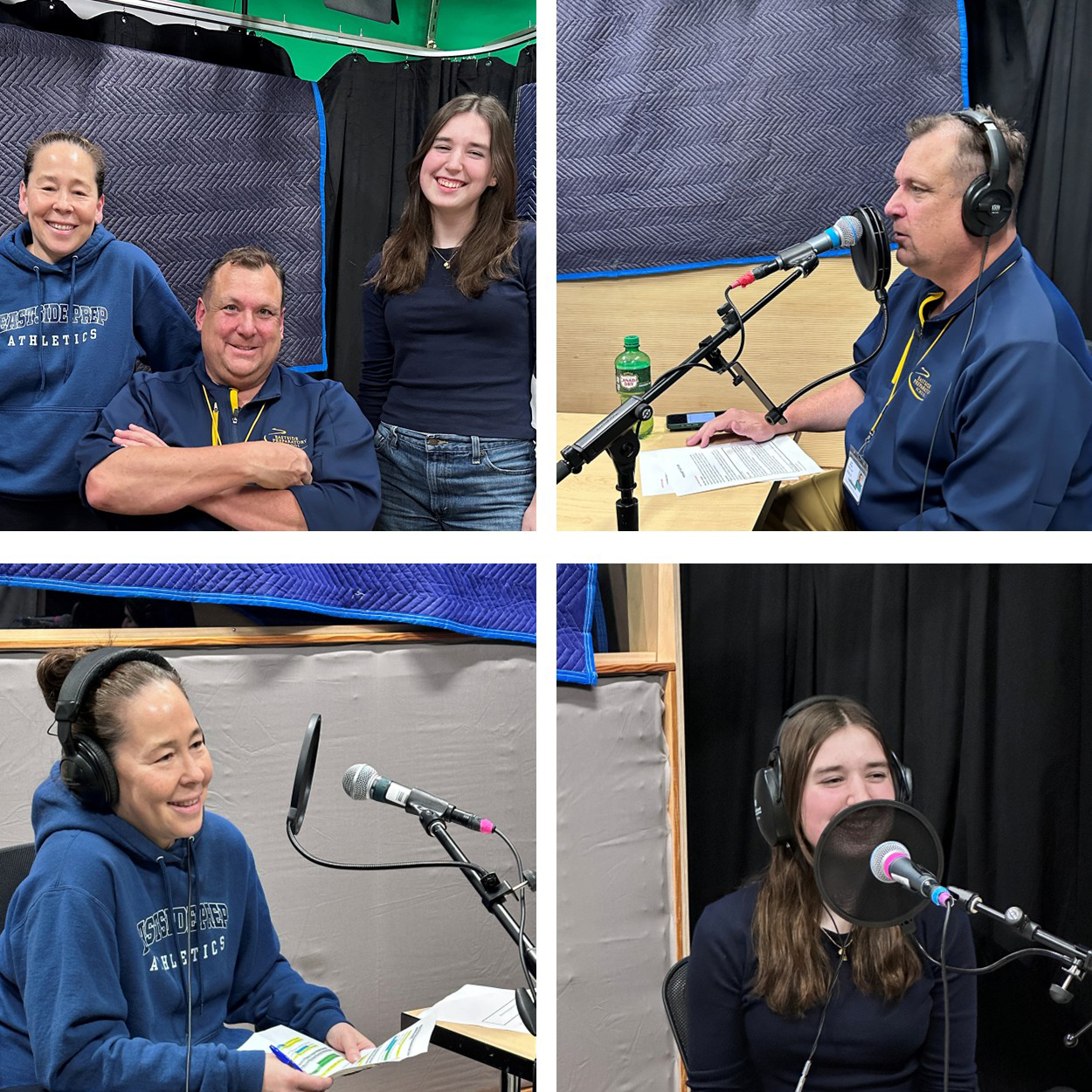
[00:00:00] Speaker A: Welcome to EPS Insightful Questions, a monthly podcast produced by Eastside Prep. I'm Sam Uswak, head of school. On our fourth season, we're exploring the theme think critically. Purposeful reflection. In each episode, we'll sit down with members of the EPS community as they reflect with purpose on their practice, their experiences in and beyond the classroom, and the questions that shape how we learn, teach, and grow together. We hope these conversations invite a little reflection of your own. So let's get started.
Today's conversation will touch on AI, our kids, and the importance of critical thinking. And when it comes to AI, our community brings a wide range of perspectives to the table. Ask 10 people in our community about AI and you'll get 10 different answers. Some are using it every day and finding it genuinely useful. Some would rather it had never arrived. For most of us, though, we're somewhere in the middle. Kids curious, a little cautious, wondering what it means for our kids.
Every one of those is a reasonable place to be, and all of them are welcome in this conversation.
Beneath those differences is a shared question.
What is leaning on AI doing to how our kids think?
Some people believe it sharpens their thinking, and others worry it actually dulls it.
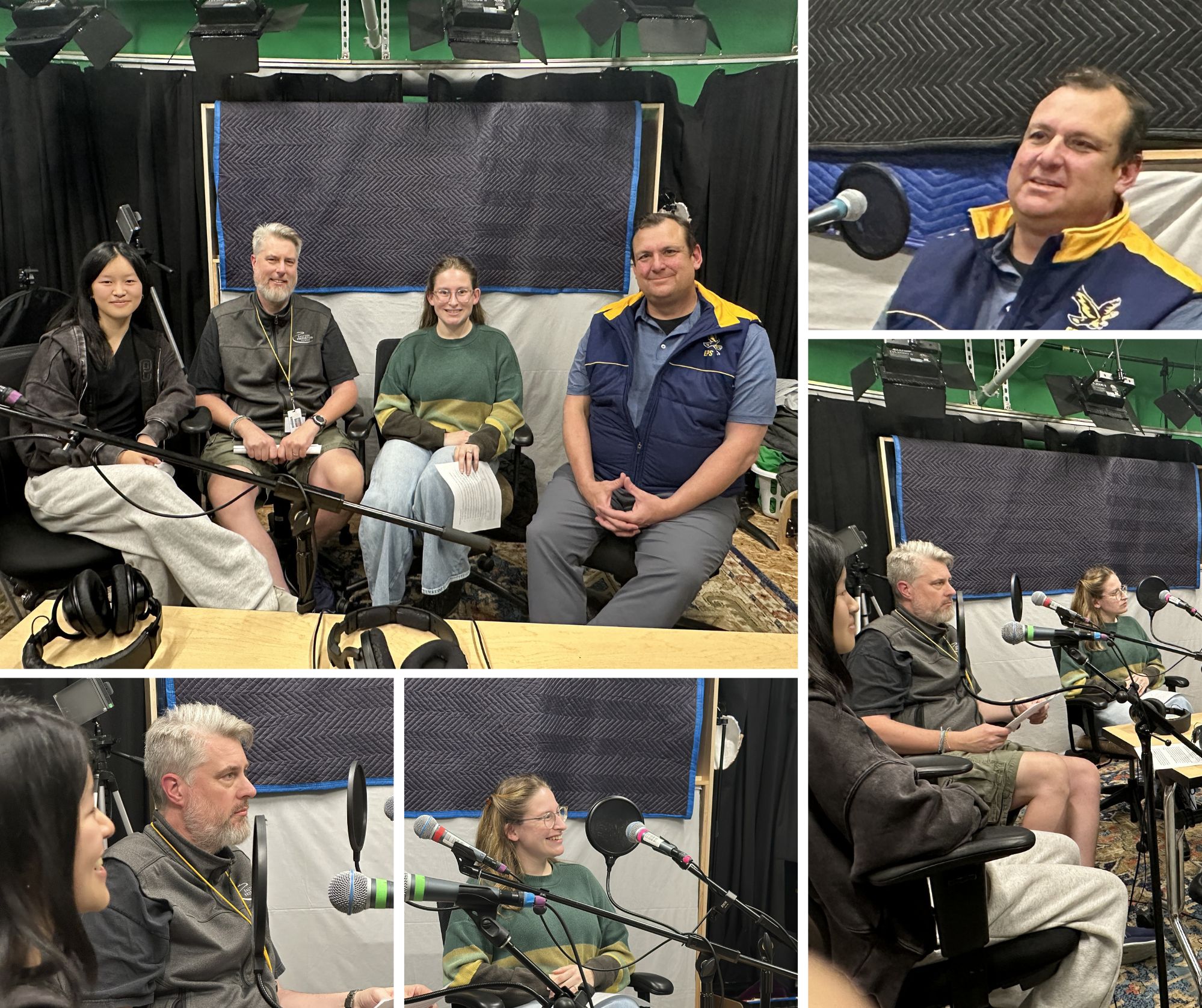
So today we're going to look. I'll bring research data into each part of this conversation. Today we welcome four people representing four vantage points. Jason Barnwell, EPS trustee and chair of our Health and Safety committee. Hey, Jason.
[00:01:34] Speaker B: Howdy, Sam.
[00:01:36] Speaker A: Jonathan Briggs, our chief technology and Innovation officer. Hey, JB.
[00:01:40] Speaker B: Hey, Sam.
[00:01:42] Speaker A: Allison Lurz, college counselor and upper school advisor.
[00:01:45] Speaker C: Hi, there.
[00:01:46] Speaker A: Hey, Allison.
And Dr. Julia Hitch, licensed psychologist.
[00:01:51] Speaker C: Hi.
[00:01:52] Speaker A: Good to see you.
And incidentally, we are also parents of current EPS students. All of us.
So thanks, everyone. Let's begin with a study that captures some of the tension around AI and thinking. And then I'll ask each of you to weigh in.
Common Sense Media surveyed a thousand teenagers this past May.
70% use AI for schoolwork. 2/3 of them say it helps them understand their work, not just finish it faster. And 38% say they came up with fewer of their own ideas because AI is there.
Same kids, both things at once.
So, Jonathan, does that split match what you see on campus? I mean, what's the difference between the student in the first number and the student in the second?
[00:02:43] Speaker B: Sometimes the student in the first number is also in the second. It really depends on what they're doing. That was back in May. I think the numbers are up to 90% of students using AI in some capacity. And I bet at Eastside Prep, we're close to 100. The issue is twofold. Is the self reporting. The students who thinks that they're more creative or less creative, are they actually. And the student who thinks that it's helping them with their learning, is it actually the primary criteria for students to be using it? Well, is, are they using it to put pressure on their brain, like to think harder about things, or are they using it to relieve that pressure?
[00:03:13] Speaker A: Alison, 38% of teenagers are telling us they have fewer of their own ideas. Now, does that land as alarming to you or is it unusually honest self reporting?
[00:03:25] Speaker C: I think the flip side is that means also that 62% of students are not reporting fewer independent ideas. So we got to look at that as well.
I'm also not sure how students are measuring their own independent ideas. I don't know how I would measure that for myself. I think that what we're hearing is honest feedback, that sometimes if there's a quicker way to do something, students are going to use it and that they're not necessarily relying on creating their own thoughts all the time. I am hearing the message that, like we as parents and as a school peers, everyone has to reinforce the message, like doing the hard work of thinking is rewarding and worthwhile.
[00:04:04] Speaker A: That's such an important message to get to students. You know, the point is that mental struggle.
But Julia, is I understand it better something that a 15 year old can even accurately judge about themselves?
[00:04:16] Speaker D: I sure hope so, because I think we've been asking students forever when we've taught something a certain way, did this make you understand it? So they've been reflecting on their learning process way before AI. And I think there are ways that AI, at least with kids I work with, with language based learning differences, are really using AI effectively. So one tool we're using in my practice is Gemini Notebook, where kids with dyslexia are uploading slides and having it turn into a podcast. And so they're legitimately coming to me and saying this really helped me understand this in a way that my brain can.
[00:04:49] Speaker A: You can see direct evidence of that in your practice?
[00:04:52] Speaker D: Absolutely. And I think we should all be skeptical. Just like Allison said, when something's quicker and easier, summarize Hamlet for me. Are they really learning it better or is it just easier?
[00:05:02] Speaker A: Right, right. So, Jason, if both numbers are true, what does the school do with that? Is this something we manage or something we teach?
[00:05:10] Speaker E: I remember long ago there were these things called libraries, and they had lots of books in them. And then I learned about these things called encyclopedias and the encyclopedias were the reduction of a lot of knowledge from primary source material into these compendiums that really were shortcuts to answer. I remember you could, if you had, for example, a report or something you had to write, rather than having to go find the source material that had that, you could go to the encyclopedia and actually get a pretty decent answer. My parents were very generous and they actually bought an encyclopedia set for my family.
Encyclopedias were this amazing realm of knowledge to just roam around in. It wasn't a tool to just get to the answer. It was a place to go explore, find new ideas, and have those at my fingertips. I think this is a pattern that we've seen that is probably bigger than just what's happening now. And yes, it is true that technology accelerates things. Pedagogical institutions have been dealing with versions of this for as long as we have been condensing our knowledge into more concise forms and making that readily available. So I don't think this is new. I think we will continue to teach through it. And really what we're trying to do is activate curiosity, intrinsic motivation, all these things that you're already really great at.
[00:06:22] Speaker A: I've been around long enough now to watch Wikipedia go from absolutely not reliable, kids don't even touch it to it's a new version of the Encyclopedia Britannica, perhaps. But that only came about over time, experience, usage, and confidence. So I'm going to toss this out to all of y'. All. That tension between using AI and doing our own thinking. How much does confidence shape the way we approach these tools?
[00:06:47] Speaker B: I think a lot. If you're confident you can do well in assignment, you're more likely to take it on. If you're worried about not doing well on assignment, you're going to look for supports, some that are useful to you, some that are not. Confidence, time pressure. Imagine a task that someone has to do or learning that someone has to do. There's a bunch of factors that can lead them down a path where they learn something, and then there's a bunch of factors that lead them down a path where they try to get it done quickly. And that can be anything from stress, lack of confidence, not feeling like they understand the base material. There's lots and lots of choices that a student has to make in order to continue down the path of maximum learning. One of the challenges with AI is that there's very little evidence of how they navigated that set of choices that we have access to as a teacher, because it's all within the chat session or it's at their house. The only way around that is to develop a model of mental fitness for students that they are strengthening their ability to think. It's not really a comfortable thing to learn. It's like frustrating. The more you learn about something, the less good you feel that you are at doing it for a while, giving students some insight into what that process feels like. I think it's very analogous for me to someone feeling sore after exercising, knowing that they're getting stronger.
[00:07:53] Speaker E: If you're out and you're doing something like skiing, it is really important to have confidence in your skills because that gives you the imprimatur to go and pursue steeper terrain. And I think there's a version of that. If you want to be on your growth edge, you have to have that kernel of confidence that actually causes you to go reach a little bit further, to go find something that's just a little bit spicier than it was before. And so I do think that having that confidence that I can do this and I can find my way through it, that is a really important part of growth and learning as a general matter. And again, I would assert this is not new. These are the patterns that are persistent through human growth and development. And so we're just seeing different versions of, I think, similar patterns.
[00:08:34] Speaker D: I would totally agree with that. My main point of my job is to help people be uncomfortable and stick with it, whether that's learning something new, whether that's being in a social situation or relationship. AI is not new in that regard, that none of us like to really be uncomfortable by default, and particularly kids when they're learning new things. But we see this in my practice with parents. Parents actually take a lot of the confidence away by doing things for kids sometimes. And so whether it's AI or parents having kids know that the discomfort is part of the process, that it's right where they should be, and it's something to be excited about instead of fearful of 100%.
[00:09:13] Speaker A: Here's our next case study. Microsoft and Carnegie Mellon surveyed 319 people about using AI at work. The more confidence someone had in the AI, the less critical thinking they reported doing.
But the more confidence they had in themselves, the more thinking they did. Trust in the tool and in themselves was strongly associated with how much thinking people said they did. So, Alison, you work with students on the one piece of writing where their own voice is the entire point. What does that finding mean for a kid who isn't yet sure their own judgment is worth anything.
[00:09:50] Speaker C: Yeah, Sam, you're talking about the personal statement I presume for their college admission application. It's a student's chance to use their own voice and to tell their story and their way and they have to trust that what they know about their life and their lived experience is enough. Part of the fun of my job as a writing coach to encourage students that they do know what they're talking about. In fact, I love it when students come in with a really, really rough piece of writing. And my job is to find a word, a phrase, a sentence, a paragraph and be able to champion that as like this is you and it's great because it's you and it sounds really good. And then let's build on that so. So that they are getting the reinforcement that what they are doing is working and that is enough.
[00:10:34] Speaker A: So what does honest use of AI look like in the college essay process?
[00:10:38] Speaker C: I went to a college counseling conference in Minneapolis just a couple weeks ago and this was understandably like a very hot button topic that was in lots of different sessions and I was in one where with a number of admission officials from various schools and from also on the technology front and they came in with some really fresh research. Only about 831 students anonymously surveyed and of those students only 20% had used AI on their college admission essays. And actually the admission officials on the panel were a little bit dismayed because it's a tool that is available and their feeling was that students are so worried about having the fingerprint of AI on their personal writing that they're not even using it for places where it would be appropriate. But you're asking for sort of the concrete line ideas should come from students. But can you use AI to help you generate some ideas that you then run with? I think yes. Can you get some feedback on where you might be able to use some more details in your writing? I think that can be useful. It seems like a no brainer to use it for something like Grammarly which our students all have. I say use me for content and use a tool for, for where it's appropriate. It can be hard to figure out in some of those in between places. But if students are coming in with their genuine ideas.
[00:11:59] Speaker A: Oh, that's very helpful. Thank you for that. Julia, you know that self trust is developmental. Where does a 16 year old get that self trust and what happens to it when something faster and more fluent is always available at their fingertips?
[00:12:14] Speaker D: I am so excited for this question because unlike everything else, we're probably going to talk about today. There's actually data on this. Since the 1970s, we've studied something called self efficacy, which is this sense of self trust, this sense of belief that I can take on this challenge. And that challenge can be academic, it can be interpersonal, it can be emotional. This sense of faith that I can do this, the way it's developed is actually through struggle, it's through error, it's through getting corrective feedback and, you know, hearing from other people about how to maybe do it differently to improve and to try it again. And so the tricky part with AI is if that's shortcutting that process, then we are shortcutting the self efficacy or self trust development. And I think that's the tension we're all worried about.
[00:13:00] Speaker A: Let's get concrete again. Jonathan, describe a student using AI. Well, what does this actually look like?
[00:13:07] Speaker B: To start, I'm going to borrow Jason's we've seen this before metaphor. If you watch teenagers, there's a time in every teenager's life where they realize, wait a minute, my beliefs about the world are basically my parents beliefs about the world. What do I actually decide? We see that in high school every year with almost every student they hit that point. There's an analogous thing with AI systems which is are these my beliefs or are these the AI beliefs? A student who's using in well, so if I go to Alison's essay idea, when we went to all the college visits, one of the college reps said, your target with your college essay is to lose it in the cafeteria without your name on it for someone to pick it up and know whose essay it is. Whether you use AI or not, that's still the benchmark. If I'm a student using AI for my college essay, I'm using it to sort of pressure test it from different perspectives and different ideas. Give me 20 different ways I can write this sentence. Let me choose the best one. That's a very different usage than here's the prompt, here's my transcript, write an essay for me. So I think even the word use is not specific enough for what we're trying to teach students to do. Fundamentally it's is it your work or not? That's kind of the end of it. And how much have you queried that work? How many questions have you asked of what the AI is outputting to you so that it's not just here's the answer, it's here's the tensions that I'm trying to figure out.
And I've explored both Sides. And now I've decided what I think.
[00:14:25] Speaker A: Before you said the word explore, the word exploration popped into my head. It's the ability to explore the tensions of the ideas and kind of go off roading with it before you circle all the way back to the final piece. But Jason, can a school teach checking your work as a normal habit rather than say, a cheating prevention measure?
[00:14:41] Speaker E: Sam the answer is yes.
That is not anywhere near the ambition that we're pursuing. I find this question interesting because it is the question that we ask at the beginning of the beginning when these things are very simple and they're basic. Let's go back to some of the other things that have been said. What we're really talking about is trying to get kids to elevate their ambition. The thing that they are trying to accomplish, the voice they're trying to put out into the world, the influence they're trying to create. And so if we start reframing the objectives that we're putting in front of them as that, then the notion of cheating starts to become less material because they're starting to define an ambition that they're pursuing. And what we're really trying to do is coach them to use every resource that is available to give that real expression of their ideas, the things they want to accomplish and the impact they want to have, and manifest that into reality. So when we start raising the bar for what we want our kids to be able to do and what they can achieve in the world, yes, we want them to have integrity and we want them to be forthright about how they do things. But it starts to get away from these narrow technical things and it starts to be focused on a more elevated set of outcomes that look very different and look past the constraints that we're talking about.
[00:15:49] Speaker A: Is part of that ambitions, seeking the road or the vehicle by which students can develop their own agency.
[00:15:57] Speaker E: Children, they want to have that agency, they want to differentiate themselves, they want to go make a place for themselves in the world. And part of what we're trying to do is foster that. When we see that spark, we want to give it fuel. We want them to go out and do big ambitious things. And so I think the answer is yes.
[00:16:13] Speaker A: So so far I've been talking about learning and self trust, but AI is also showing up in a much more personal part of our students lives. So Julia, I'm going to read this and then I'd love to hear your reaction. Our next case study. This is the number, to be honest, as we were preparing for this, this really grabbed me. In Common Sense Media Census this spring, 1200 kids ages 9 to 17, 37% of the kids using AI have used it to talk about their feelings or personal problems. Of those, one in four say AI sometimes understands them better than most people do. And 12% of all kids say they'd ask a chatbot before a trusted adult about a health question. Among kids using AI every day, that's 27%. So, Julia, what do you make of that? And what's the difference between a kid journaling to a chatbot and a kid replacing people with one?
[00:17:07] Speaker D: Those numbers are chilling in a lot of ways, but not surprising if you think about it, because these models are endlessly available, endlessly validating. They remember everything you've ever told it. It's hyper personalized, which is so much better than us pesky humans. I do this for a living. I think I'm pretty good at validating. Just ask my girls. I get it wrong more times than I get it right. These are really appealing models for kids to engage in. It goes pretty quickly from journaling. I think about my diary that I had in middle school with the little heart lock. I just would put all my thoughts and feelings in there and maybe a few crushes. It wouldn't write back. Whereas the chatbots are writing back, they're validating, they're reinforcing things. And it comes to advice pretty quickly. And where this is really concerning for us as psychologists is a kid's feeling lonely and distressed and suicidal. These chatbots are validating nonjudgmental. And there's no safeguards around letting people know. So unlike a trusted adult coming and saying, hey, feeling suic or I'm worried about my eating and there's a bunch of safeguards for kids to get help, there aren't with these models.
[00:18:13] Speaker A: So what would you want a student to notice in themselves?
Not necessarily what a parent should watch for, but what a kid might catch on their own in this process.
[00:18:24] Speaker D: I think Jonathan brought up a really good point earlier. Teens and kids don't like to be manipulated, but particularly teens. Having teens be really curious about this model that continually agrees with them and reinforces them. So I think noticing that is important. I think having conversations with kids, when would you notice that you're off track with using this? When would you be creeped out with this model? When would it be a problem for another kid using this and having them articulate it? You know, for me personally, as an adult and a parent and a psychologist, I would want them to be really nervous if they notice their social world shrinking, that would be a really important sign.
[00:18:59] Speaker A: Julia, where are the fears overblown and what can parents actually set down?
[00:19:05] Speaker D: There's some good reason to be trepidatious about your child having a relationship, and I'm using that in air quotes here with a bot for the very reasons I talked about. That said, I don't want everyone to leave this podcast terrified. Right. I do think where we can feel okay about this is if your kids are doing the jobs of their childhood, which what I think of as are they going to school and participating and doing their stuff? Do they have a hobby outside the home with real people around their age that they're engaged in? Do they have in real life friendships and relationships that they're seeking out? Do they have chores? Your kids should have chores. Everyone compliant with you as parents about 75% of the time. More than that, I actually worry. Less than that, I kind of worry. So if those things are happening and the other piece I would say where you can set it down is if you're being really good about following the council to keep your kids devices out of their room when they should be asleep. Because when we see the problems that have happened with AI and kids, they've logged thousands of hours and so when is that happening? Having them out of the room, particularly overnight, you can rest more assured that funky things aren't happening.
[00:20:09] Speaker A: Putting it in the context of the rest of the childhood,
[00:20:12] Speaker D: 100%. I mean, one of the things we think about as psychologists about worrying about anything is when we see impairment. Your kid is having any sort of impairment in those domains. That's when we should get curious.
[00:20:22] Speaker A: We'll pause here right in the middle of the conversation.
Julia has given us a lot to think about what it means when kids bring AI their feelings, not just their homework. In part two, the rest of our panel responds and we'll ask what a school and a family owe students now. Thanks to our guests and thanks for listening to insightful questions.
For more insights, be sure to check out the EPS weekly news every Friday.
Sam.