Episode Transcript
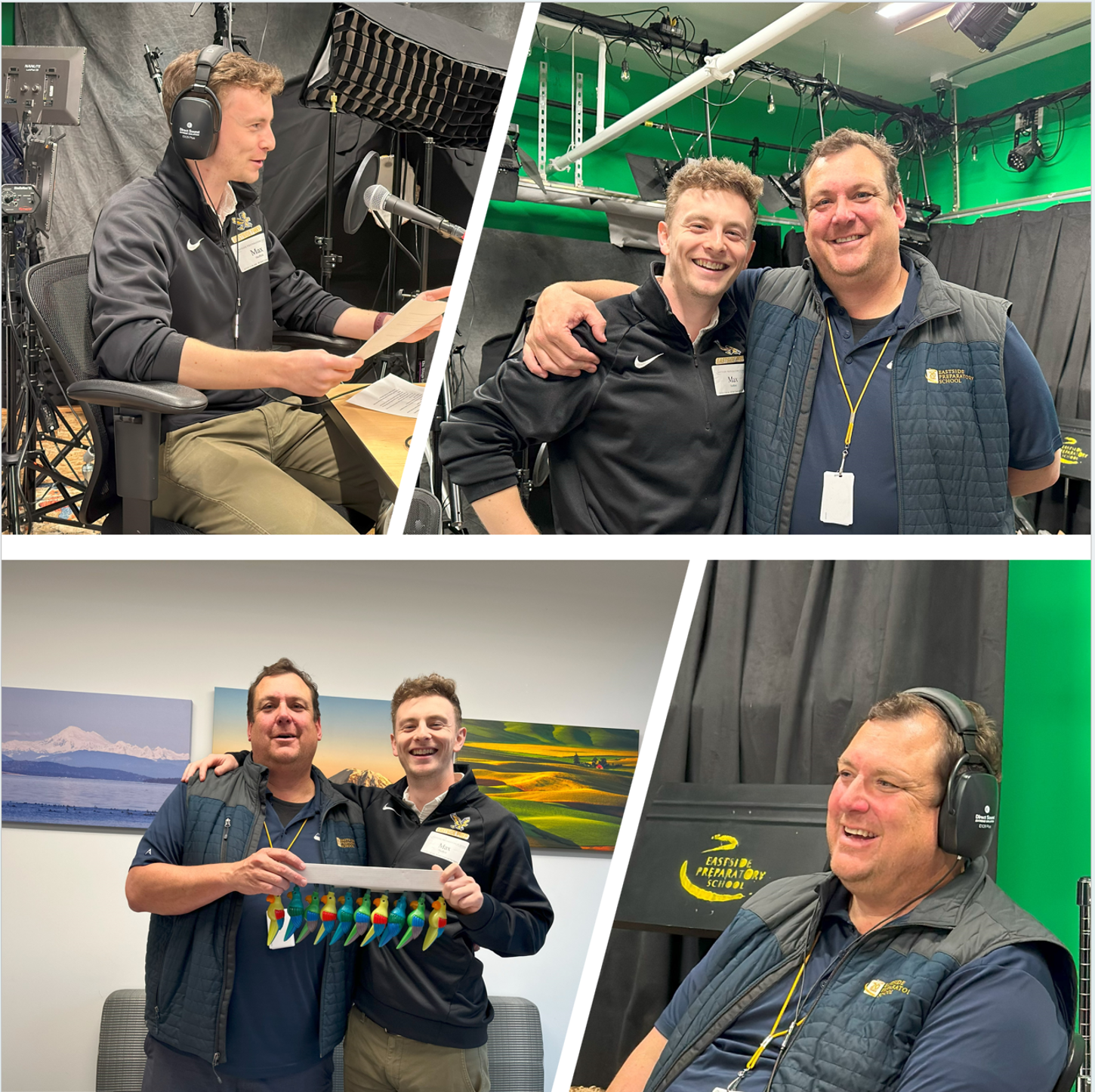
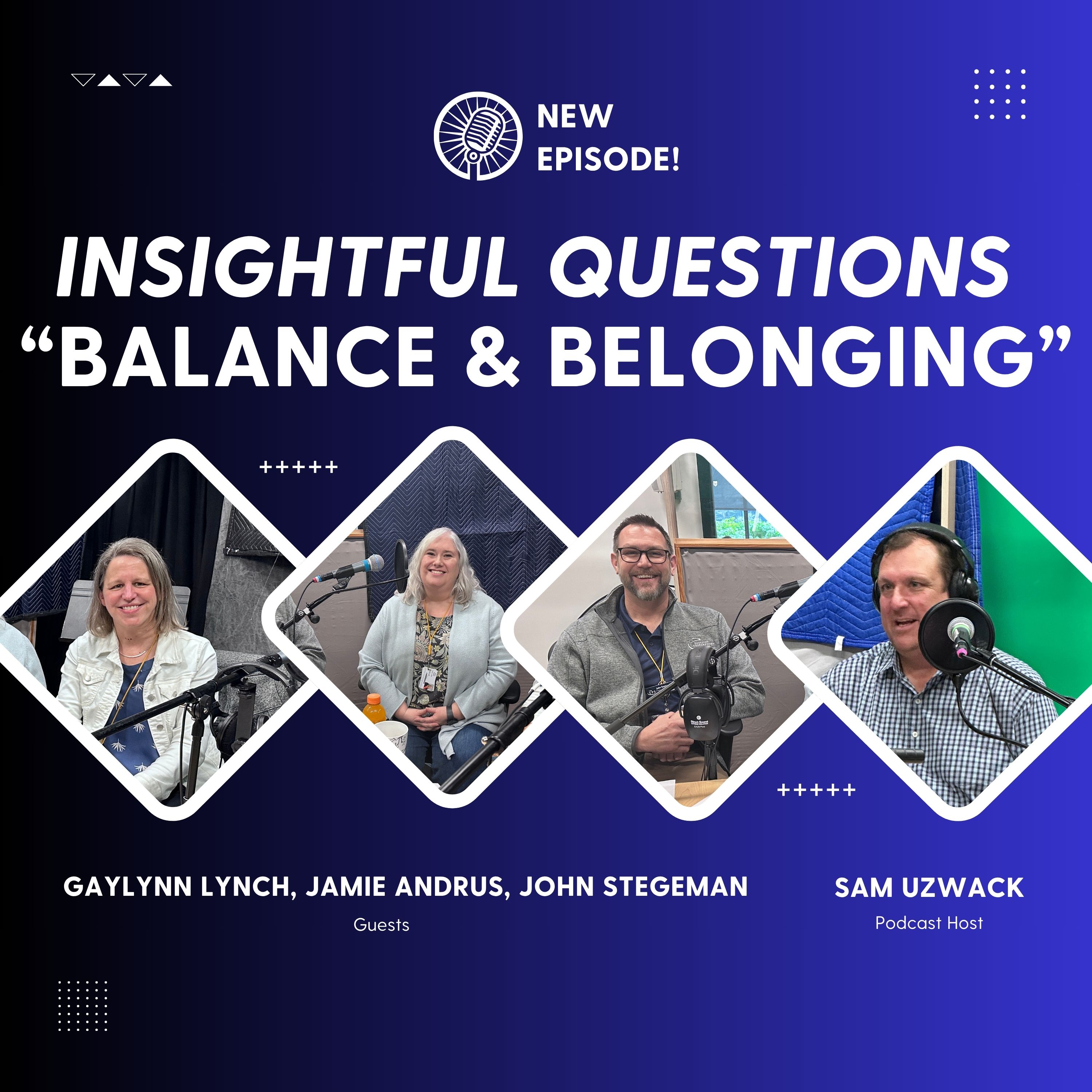
[00:00:02] Speaker A: Welcome to Insightful Questions, Eastside Prep's monthly podcast. In our third season, we will feature conversations with members of the EPS community, all centered around this year's theme, Responsible Action. Care through Clarity. I'm your host, Sam Uzwak.
Today we're diving into the topic of sustainability and stewardship.
What does it mean to care for the environment with intention?
How do we balance personal responsibility with collective impact?
And how can schools like EPS help students grow into environmental stewards?
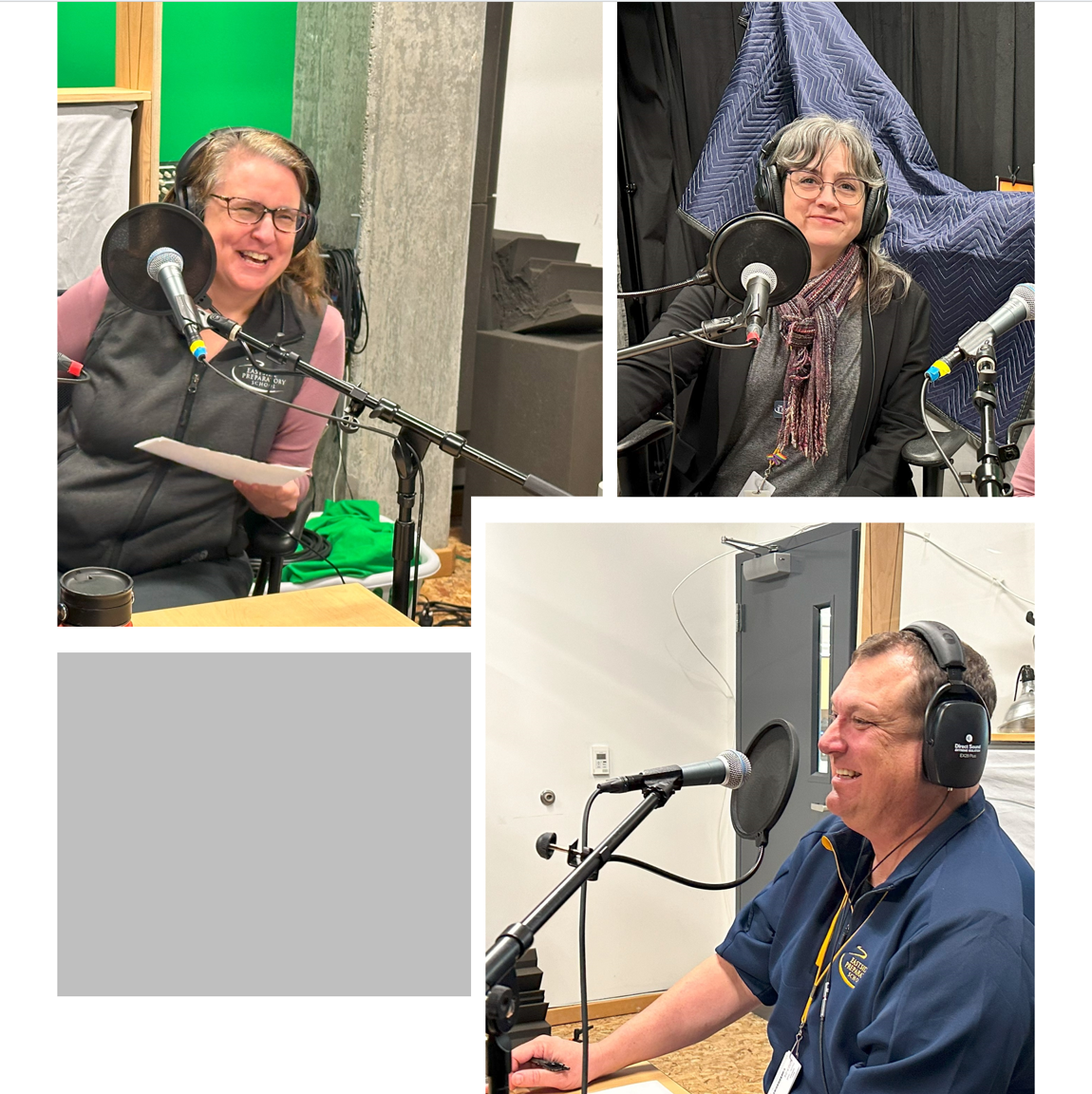
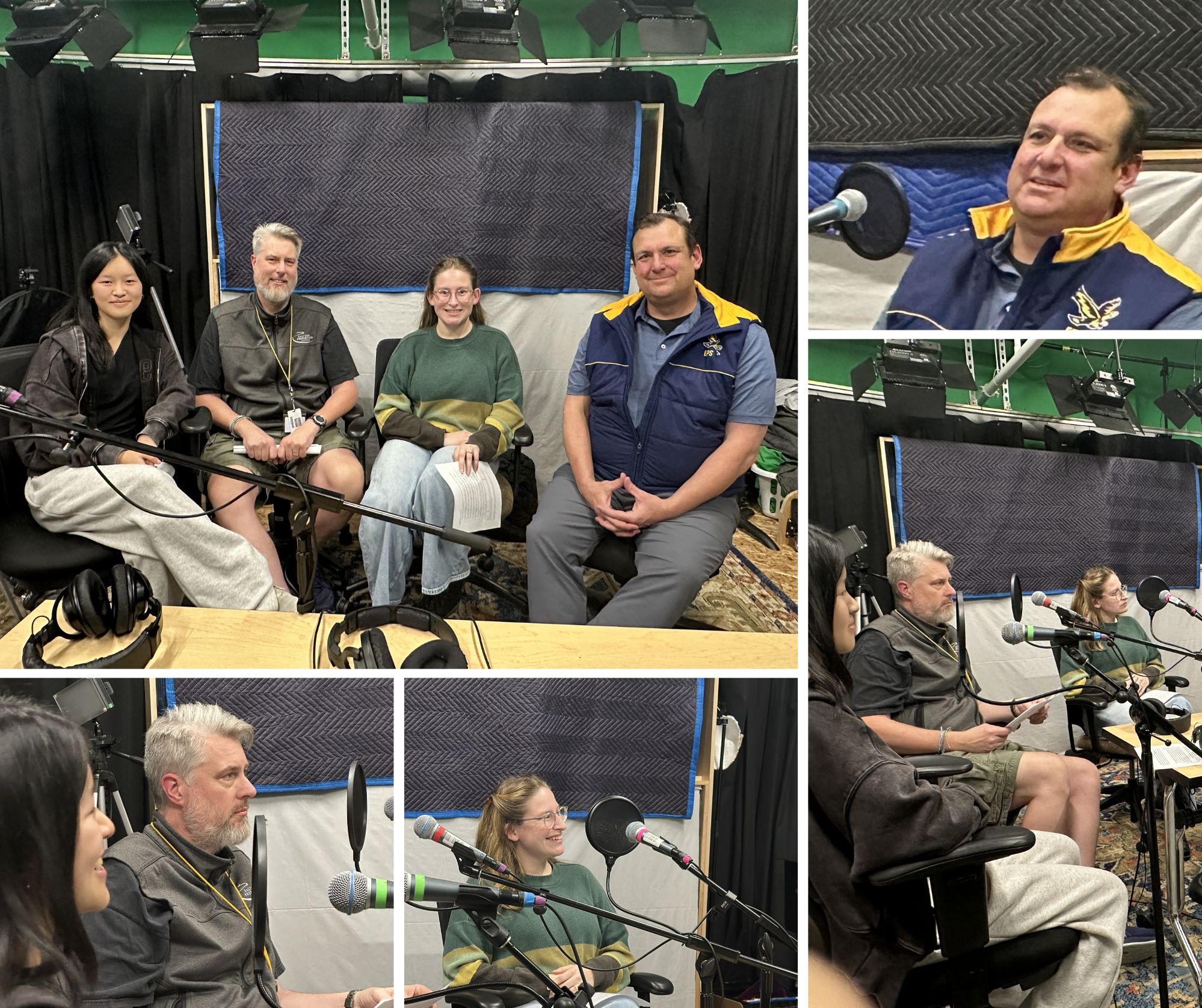
To explore these questions, I'm joined by three guests who bring experience, passion and perspective to the conversation.
First up, we have Burton Barringer, middle school science teacher at EPS and a key driver of our environmental practices program.
Burton has been working closely with students to turn ideas into action.
From implementing green habits in the classroom to partnering with the Kirkland Parks Department for hands on service days and at Watershed Park. His passion for helping students build real world connections with nature makes sustainability feel less like a concept and more like a shared practice. Hey, Burton. Hi. Great to see you.
[00:01:32] Speaker B: It's fun to be here. It's fun to see you use hand gestures while we're on a podcast.
[00:01:36] Speaker A: Also with us is Allison, a current 11th grader and an active member of the Environmental Club.
Whether she's helping organize on campus initiatives or diving deep into discussion about climate and conservation, Allyson brings a thoughtful and practical perspective to environmental leadership through her environment focused independent studies. She has explored fungal symbiosis and lettuce grown in lunar simulant soil and co created a new seminar, Art Meets Science. The the Creative Connection, where students use scientific concepts to create art.
Alison knows how to engage peers, especially those who don't see themselves as eco people, and make sustainability feel accessible and relevant. Alison, thank you so much for being here.
[00:02:27] Speaker C: I'm excited to be here too.
[00:02:28] Speaker A: And finally, we're joined by Maren Carpenter, a resource specialist at King Conservation District.
Maren plays a vital role in implementing riparian restoration projects, including the one at Cochrane Springs, just steps from our EPS campus. Her work is all about empowering communities to care for and restore local ecosystems. With deep knowledge and a collaborative spirit, Maren helps connect policy, science, and stewardship in powerful ways.
Maren, great to see you.
[00:03:00] Speaker D: Thanks for having me.
[00:03:01] Speaker A: All right, so we're going to jump right in, and this is a question for all three of y'.
[00:03:06] Speaker B: All.
[00:03:07] Speaker A: What's one place on campus, at home or outdoors, that you feel especially connected to or protective of?
[00:03:16] Speaker B: I mean, I'm always happy outdoors. I teach a seventh grade class where we're outdoors a lot of the time, thinking about EPS and being here, I mean, what comes to mind first would be Watershed park, our schools partnership there since the beginning of the school and the service work that we do up there and taking students up there to learn and do things. And then secondary to that is now building six next to Cochrane Springs, as we're developing that area, restoring it, having a classroom down there. Saw a great blue heron there the other day and took a picture of that down there a lot. It's ours, it's our space.
[00:03:44] Speaker C: For me, it's also an outdoor space. It's the Cross Kirkland corridor, which is just a few minutes walk from eps. The cross country team runs there every week. And then when I'm running there, it's like you just relax, let your mind wander, have the wind in your face, kind of de stress after the school day. And it's really fun because I see a lot of EPS students and faculty there as well, either walking or biking or running to and from from school or just exercising. And I think it's a great place, great outdoor place for the entire community to just relax and gather around.
[00:04:13] Speaker D: I grew up in the Pacific Northwest. I think just generally the Pacific Northwest is so special. I feel very connected. Mount Rainier, this sound, Ashpoint State park, that feels really special to me. A great place for nature in a sort of more urban area.
[00:04:29] Speaker A: I live in West Seattle. I'm very fortunate to live across from Lincoln park, which has really beautiful forest. If you walk all the way down, you can get to this particular point that juts out into the sound. When these atmospheric rivers are coming through or the winds are picking up. Just to stand there and be able to see the sound, the mountains, and feel the wind. It's really powerful. And I sort of have to remind myself this is five minutes from where I live. I try to take a 5, 10 minute walk every day just to go say hi to the creek, stand on that bridge and start to see what's changing, you know, are there different bugs coming back? There are some frogs. Just all the progress. The students and the faculty and staff, you know, just kind of check up on it every day.
[00:05:08] Speaker D: So it's a lot of fun to see things kind of grow if you're paying attention to the little details over time.
[00:05:14] Speaker A: Yeah, it's really impactful. All right, so Maren, this one is also for you. What does stewardship mean in your work? And what's one thing most people don't realize about how local ecosystems stay healthy?
[00:05:24] Speaker D: So stewardship, in my eyes, is making sure that we're taking care of our ecosystem. We're making sure that there is clean water, clean air, healthy soil, habitat for all of our creatures. It's important to realize sort of how interconnected everything is. And so seeing yourself as part of nature, rather than sort of a force upon nature is really important for being a good steward. There are so many things that can go into being. Being a steward of the land. Planting native trees and shrubs is really connected to everything. If we have more trees, we have more shade, we have healthier air, we have healthier water, better soil. And so it can really like cool down our city streets. By having that shade and stuff, it benefits us, but it also benefits animals. And having leaf litter on the ground really supports our pollinators. And so that helps our food system. Just it's all really interconnected. You are aiding in for everyone, including animals to live in.
[00:06:28] Speaker A: So for everyone, terms like sustainability and green get thrown around a lot. How do we make these ideas clearer and more meaningful to students, families and our community?
[00:06:39] Speaker B: Sustainability is the ability to maintain or support life and processes over the long term. Essentially meeting today's needs without compromising future generations ability to meet their own, balancing environmental health, social equity and economic value.
Of course, that was with an AI assist on that. Very well worded, of course, and thinking about it in broad terms. But when we're throwing that out, is that always the meaning that we're trying to convey and then trying to make that accessible to people that aren't as vested or even thinking about it yet? So if we're taking it as a big chunk like that, it's a big piece. But if we try to break it down into smaller, more manageable pieces or choices that we can make in our lives, that's a way that I like to think about it with students or how I interact with our community. What are the pieces that we have control over and what can we do?
[00:07:19] Speaker C: For a lot of people, it just seems really abstract. In my experience, people feel like, oh, sustainability is this far away goal that we always have to keep working towards. You can never really get there. It is far away, but in order for people to care, they have to have hope and know that it's achievable. So then I looked into the Bullitt center in Seattle. It's a commercial building in Seattle. It's actually the greenest commercial building in the world. So I actually visited one day and then I saw that all of the buildings like infrastructure and systems like ventilation, heating, wastewater, everything was like circular. The building Produces more energy than it uses. It's just the perfect image of sustainable structure.
[00:07:54] Speaker D: Can look like green and sustainability are often used to sell things. So that's become sort of a little word that's used and tacked onto things, which I think makes it a lot more confusing for people to know exactly what to do. It's like, do I buy this dish soap? It's a lot less about choosing a specific product and more about doing what you can in your community.
Just reducing what you currently do is already a step in a positive direction. It can be a little daunting. There's small steps that are very easily integrated into your everyday life that have a big impact when everybody's just doing their little parts.
[00:08:32] Speaker A: So to that end, Allison, have you ever helped lead a project where other students got involved in something sustainable even though they didn't think it was their thing at first?
[00:08:42] Speaker C: Actually, a prerequisite for sustainable action is appreciation for nature and the outdoors. I think if you don't have that, then like any sustainable action you take, it wouldn't last. So one of my projects right now, the seminar I'm working on with Ms. Balcomb, Art Meets science. This seminar is a project based course. One of the projects is students take a bird feather, like a leaf from their backyard, something small, and they actually grow crystals on it. Then they put it under a microscope to see like the tiniest details of the crystal structure and like the texture and color of the art the that they created. When I did this experiment the first time, this is a whole new world that I'm not seeing. And it's all natural and it's all around me, everywhere, all the time. My hope is that students who maybe signed up for the seminar because they were interested in art or science can see that nature connects everything and it's everywhere. Hopefully through that they can see that sustainability is integrated into their field of interest.
[00:09:31] Speaker A: Now, Burton, you've been teaching for a while, a few years. What is the most creative solution or idea a student has come up with related to environmental care?
[00:09:40] Speaker B: There's so many aspects of things that we've done, like working with Allison, you know, working with Hinck Conservation District, doing the environmental classes that we're doing. There's a lot, but there's one that came to mind. A student, she was in sixth grade, she was inspired by Mr. Winkelman's vision project, our vision statement to inspire students to create a better world, and had this idea for solar panels and the newly created Talley Building and went and did a bunch of research and priced it out, presented it to our then director of operations, an adult meeting. It was awesome the way she approached this and just had these ideas that we're going to do that helps inform what we do and decisions that we make in hopes that we even have for building six and our own sustainability center that we're building now.
[00:10:16] Speaker A: There are so many instances where students present an idea or come up with a solution. Kids have all of these capacities, right? Burton, you see it day in and day out. When we went to talk to the city of Kirkland about Cochrane Springs, Rachel Conrady, who works there afterwards, was like, that was a better presentation than many. And I think we have to always remember that when you ignite interest, a venue for curiosity and for making an impact, kids will rise right off the bat. So, Maren, what's a school partnership or student led project that really stuck with you? And why, of course, beyond ours?
[00:10:49] Speaker D: It's actually pretty special that we are working with you. We don't frequently work with students in this capacity. This project at Eastside Prep is quite special to me. I'm excited to be a part of it. A different opportunity I had to work with students was the they wanted to do their Eagle Scout project. They reached out to King Conservation District. They wanted to restore a park in Burien. And so I went out, met with them. We discussed what invasive species are out on the site, what native species could do. Well, they came with their whole scout troop, volunteered at our nursery to earn all of the plants that they were going to use on their project. So our nursery is done as like a cooperative. Volunteers get plants in exchange for their time. Came out, got a bunch of plants, a few hundred, and then took those out and actually led the whole volunteer event. Followed a general design that we had come up with together. So it was really fun to see them be so ambitious with their time to get all of their scout members together along with family members. And park looks pretty good. So that's great.
[00:11:57] Speaker A: That's great. How do we encourage people to take action without making them feel overwhelmed or judged or like they have to be perfect?
[00:12:06] Speaker B: Marin hit on this early. It affects obviously every living organism on our planet, how we approach it. And that can just be so daunting for so many people. And if I can't do all of it, then I can't do any of it. To pick a small thing, if you did like one thing, maybe it's the vegetarian meal a week, maybe it's, I'm gonna put this recycled paper into this bin. Or whatever it's gonna be to plant the seed, if you will. Like, if you can do that one thing and be successful at it, you can feel good about it and then maybe more things are going to come. But it also makes you aware then and be conscious to make further choices and just build from a small place. Do the thing, do a thing for the Environmental Club.
[00:12:39] Speaker C: When we're trying to communicate things with the rest of the school, like, one of the biggest lessons that we learned came from Earth Day Eagle Cons. Last year we tried the slightly new approach. We made it more interactive. We started off with a debate. We posed some pretty serious questions. How can we reduce the energy use of EPS buildings? We saw the entire theater got engaged and all of the students, the faculty, they were all laughing along with them. Nobody was just like sitting bored in their seats. And after the Eagle Con, we actually heard people chatting about the questions, like both laughing at the jokes, but also considering it seriously. So we're like, yeah, maybe people didn't actually answer the questions in the way that we want. But just getting people engaged and having fun doing it, I think having fun is the important part that they want to keep interacting with this. After that Eagle Con, we learned that the most important thing was just let people have fun and enjoy the content instead of talking about they're not doing enough or they're not doing well enough.
[00:13:35] Speaker D: It really is just looking at the little things that you can do. We can all feel guilty all day long about how we live our lives and how that may have a negative impact. But I think it's really important to look at just the little things in day to day life and in your community that you can have a positive effect. One thing that you also mentioned earlier, Alison, was that in order to sort of feel like you want to do better, you have to feel a connection. And so something that I think is really important is just getting outside, getting involved in nature, maybe finding one thing you think is really special and make that sort of a reason why you want to make a change. And it doesn't need to be a huge change. You found a bird nest, you thought it was really special, and now you want to protect the tree that it was in so you're not going to cut all of its branches off or something. Top the tree next season, find something that you think is really special and focus on how you can make an impact for that thing and then you can grow from there.
[00:14:39] Speaker A: All right, last one.
So If a future EPS student listened to this episode in 10 years what is one message or value you hope they still hear loud and clear?
[00:14:55] Speaker B: I hope they hear it in this podcast, but we know our vision statement and we can say it, you know, to inspire students to create a better world. I'm hoping that they heard that when they were here. I'm hoping they're hearing that in our podcast and I'm hoping graduate of EPS they're living that life and hopefully inspiring others to do the same. Obviously we have three of us here and you yourself have been on that towards sustainability as being a piece of that and I hope that is for them as well. Whatever means that they're doing that to make a the world better for all of us. Be great.
[00:15:20] Speaker C: My message would just be to stay kind and stay curious. I definitely don't expect everyone to be actively involved in sustainability.
Having appreciation and gratitude for everything and everyone around you and also keeping an open mind. Doing that passively will make a big impact on your community.
[00:15:37] Speaker D: Staying focused on your local sort of area can have huge impacts. So staying kind curious, my goodness, those are wonderful things I always like to think about. You know, as I say, you are part of nature, not a force over nature. And I think that comes with empathy for humans, but also empathy for animals and everything kind of around us and really feeling that connection and so remembering that you should try to put yourself in all of these other shoes, including little squirrels, and just like really try to have a positive impact.
[00:16:17] Speaker A: Well, thank you so much, Burton, Allison and Maren for sharing your time and insight with us today.
This conversation reminds us that sustainability isn't just about science.
It's about relationships with place, with people, and with our future.
And thank you to everyone for listening.
We'll be back next month with another episode of Insightful Questions. Until then, take care and keep asking thoughtful questions.
For more insights, be sure to check out the EPS weekly News every Friday.