Episode Transcript
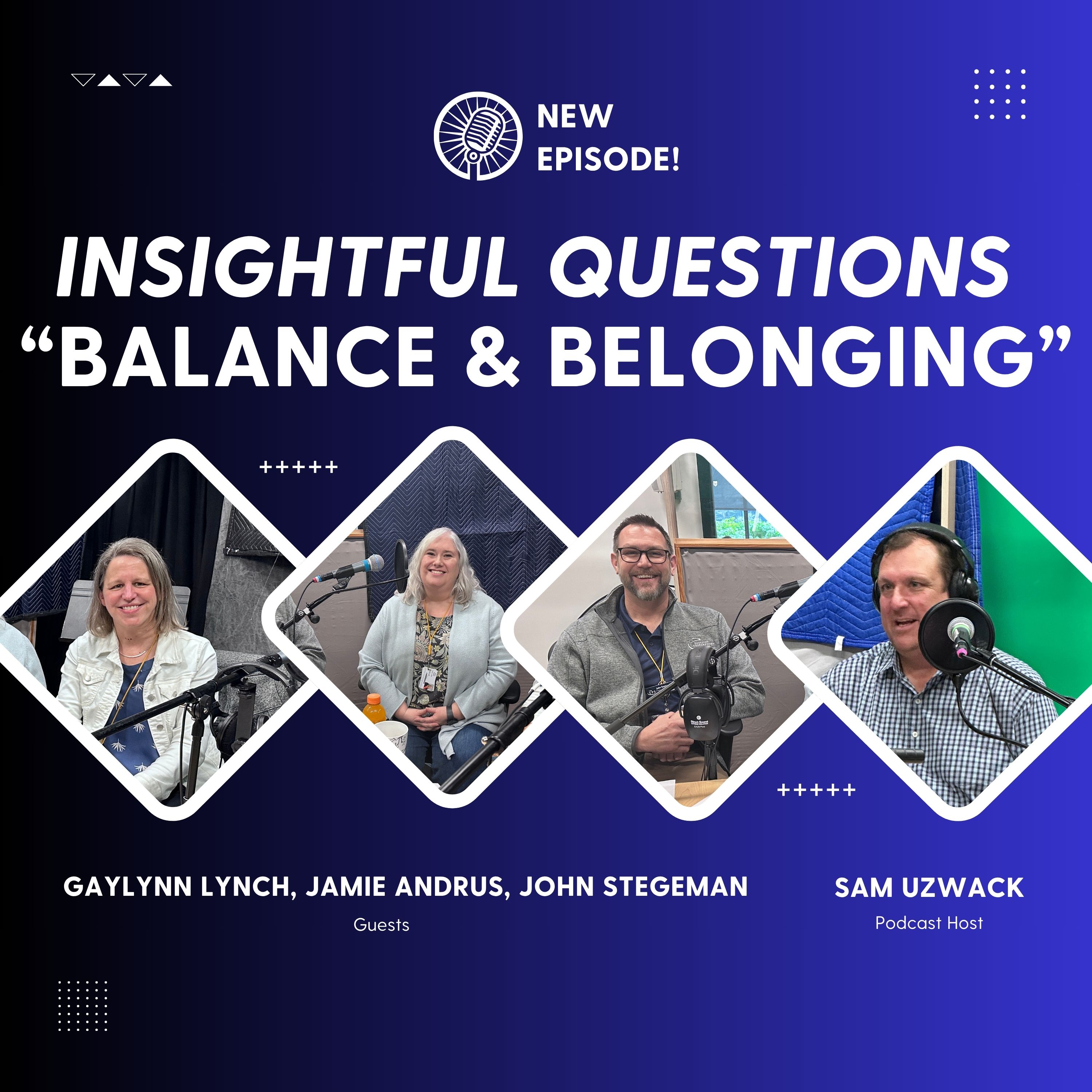
[00:00:02] Speaker A: Welcome to Insightful Questions, Eastside Prep's monthly podcast. In our third season, we will feature conversations with members of the EPS community, all centered around this year's theme, Responsible Action. Care through Clarity. I'm your host, Sam Uzwak.
In this episode, we're exploring what it really means to create balance and belonging in a school community.
How do we challenge students academically while also protecting their well being? How do we make sure every student feels seen, supported and responsible for one another?
Today's conversation looks at how clarity in expectations, communication and care helps create a healthier, more connected school environment.
We'll talk about what balance actually looks like in middle and upper school and how shared responsibility helps our community thrive.
Joining us today is Gaylyn Lynch, a middle school teacher now in her third year at EPS. She teaches Introduction to Scientific Thinking and Mathematical Thinking 3, serves as the fifth grade level coordinator and coaches the Upper School Science Olympiad team. Galen approaches her work as a lifelong learner and recently participated in the Air and Space Museum's Teacher Innovator Institute, has applied to join a Burke Museum field dig this summer. And outside of school, she enjoys hiking and backpacking. Galen, welcome to the podcast.
[00:01:36] Speaker B: Thanks, Sam. Happy to be here.
[00:01:38] Speaker A: Our second guest is Jamie Andress, Assistant Director of student well being. Now in her ninth year at eps, she began as a learning support specialist teaching guided study hall, later became learning support coordinator and stepped into her current role in 2023.
Jamie's work focuses on helping students navigate learning challenges through careful observation, collaboration and creative problem solving. Outside of EPs, she enjoys podcasts and audiobooks, watching wildlife near her North Bend home and spending time with her family. Jamie, we're so glad you're here today.
[00:02:12] Speaker C: Thank you. I'm glad to be here.
[00:02:14] Speaker A: And our third guest is Dr. John Stegman, upper school head, now in his seventh year at EPS. Along with leading the upper school, he has taught seminars and Latin American history and enjoys chaperoning EBC trips where meaningful student connections often take shape.
Much of his work happens behind the scenes through close collaboration with teachers and school leaders to support a strong learning culture outside of school. He recharges by cycling year round and traveling throughout Latin America. John, thank you for joining us today.
[00:02:47] Speaker D: You're welcome, Sam. It's a pleasure.
[00:02:48] Speaker A: I appreciate you all being here today. Let's start with a simple question to warm us up. When you hear the word balance in a school setting, what image comes to mind and why?
[00:03:01] Speaker B: Part of fifth grade orientation, we go to a camp and do some team building activities. And there's this Giant platform that can rock in all different directions. And so it's not just about having one thing on one side and one the other. You have to think about position, you have to think about weight, you have to think about center of gravity. So the kids work together to get that to balance. And that's what makes me think about in the school setting, because you're battling so many different things, but in different ways at different times.
[00:03:26] Speaker C: I think about juggling and especially because you can learn skills to become a better juggler, but also sometimes you can set some things down. And that can really help you with that balance as well.
[00:03:39] Speaker D: The image that came to my mind was a slack line. When I see kids on slack lines, that's a hard thing to do, but they seem to be having fun at it.
[00:03:46] Speaker A: Galen Middle School can feel like constant motion. What does balance realistically look like for students at this stage? And what's something adults often misunderstand about it?
[00:03:59] Speaker B: Honestly, the first word that came to mind, Sam, was messy. As you think about balance, it's really important. This is a great time to figure out what works for students, what doesn't work. But I think ultimately, and maybe sometimes the adults don't realize this is it has to be a combination of both proactive thought and sometimes reactive that we can work with our students to block out their schedule for the week where they're going to focus on schoolwork. But sometimes things are going to come up. Are they going to have a rough day at school and coming home and doing their homework first thing, Even though that was the plan to help them balance, maybe activities for later in the evening is just not going to work that day. Teach them to give themselves grace that it will be messy. Sometimes they won't necessarily be able to hit all their goals how they intended, Particularly if they had maybe allocated time for something. As they transition from elementary to middle school, up until now, a lot of their time and even maybe their interest can be very dramatic, driven by parents and family as they start to get into their own identity. They're going to have their own ways they want to spend their time. And it may be that they're arranging their own play dates or wanting to block out more time for friends than maybe they have in the past. And I think that's that give and take that families have to work with their students own as well.
[00:05:10] Speaker A: And do you find that sometimes for parents and guardians, recognizing that the student agency that's emerging in terms of them wanting to chart their own course can actually be tough as a Parent?
[00:05:20] Speaker B: Oh, yes. And I speak as a parent myself, someone who's worked with students for many years in this age. And part of that is because, again, maybe you have certain goals or maybe they've been doing something for years that they're really good at and took a lot of pride, and you have trouble helping them let go of that. Maybe they've been playing soccer for six years, but now they want to try ultimate Frisbee, helping them realize they can't always do both things and it's okay to try something new. And we've done this in the past and we enjoyed it. It doesn't have to be our whole identity that we're a soccer player for every year we go to school.
[00:05:51] Speaker A: JOHN Upper school students juggle academics, leadership activities, and future planning. How do you help them understand that balance isn't necessarily about doing less, but about prioritizing?
[00:06:04] Speaker D: Clearly, I think there's a distinction between less and fewer that's helpful here. Doing fewer things doesn't necessarily mean doing less. We spend a lot of time prioritizing depth over breadth in our curriculum, for example, and that might mean that we're covering fewer topics, but students are learning a lot more because they're going deeper and they're having a more meaningful experience. I'm interested in which ones they enjoy and which ones they don't, which ones they find meaning from, which ones are connected to future goals, which ones feel like obligations. That's an interesting conversation to have with a kid. If a student is trying to build a list, doing more things is a better list. If a student is trying to tell a story about themselves, we want that narrative to be deep and substantive. And sometimes that story can be complicated and obscured by a greater number of things.
[00:06:55] Speaker A: Jamie how does clarity around expectations, whether academic, social, or behavioral, actually reduce anxiety and support wellbeing?
[00:07:05] Speaker C: When we look at all of the work that students are doing, when they are having to spend a lot of their processing ability figuring out what teachers or coaches or parents are asking them to do and expect of them, there's not very much left for the actual task itself. And so it can make a task feel a lot more daunting. Even if it's something that they actually would be able to do quite well and it really wouldn't cause them that much stress. Generally, when they are feeling like they don't understand what those expectations are, when they don't know what the goal is and what they're reaching for, that can actually make that a much more stressful situation in learning. Support our Teachers kind of look at their assignments to make sure that directions, the expectations are really clear. And that's really true of almost everything that we're doing on campus. All of that helps with that feeling of balance.
[00:08:00] Speaker A: Kaylin and John, what are early signs you've noticed that a student might be out of balance? And what's a responsible first step adults can take?
[00:08:10] Speaker D: My first response comes as a parent. I think of the times when my own children have exhibited stress shows up in daily habits, it shows up in bedtime routines, waking up and getting ready for school. A loss of interest in a preferred activity. One is to simply observe and discuss those observations with other people. Second is inviting a conversation with my child to say, hey, I've noticed this doesn't seem to bring you the joy that it once did. What's going on? How are you feeling about that? So the more we can engage our kids in conversation, I think that's the
[00:08:39] Speaker B: best way in parents will see it before teachers, particularly at the middle school age. I think it's very common for students to hold it together for lack of better term while they're at school. And sometimes that breakdown will happen, whether it's tears or stress. So I would definitely encourage the parents listening to this if you are noticing those signs, to reach out to your child's advisor so that we can help that partnership. Otherwise we do sometimes see the signs that John talked about when we see them not take as much joy and then we just invite those conversations and try to problem solve with them. Many of our EPS students do put high expectations on themselves. I think I speak for myself and other teachers that we want to work with them to know that's about balance as well. So it's okay to get just that standard practice that's going to make sure they know the concept and not necessarily need to engage in that higher level challenge homework for that particular day.
[00:09:28] Speaker A: How much am I able to do in this particular assignment or this particular activity? Especially as students get older and things become more complex, the time commitments increase and there's more friends and, and, and you can't just do everything full throttle extreme all the time. Jamie, how do you help students understand that caring for themselves isn't selfish?
It's actually part of caring for others.
[00:09:54] Speaker C: Where I really think they struggle is understanding that taking care of yourself does need to come before achievement. And part of that's obvious if we're not taking care of ourselves, if we're not sleeping, if we're not eating well, if we are not resting, we are not Able to actually fulfill those things. Self care actually helps our achievement. Overall rest is productive.
You have to have that in order to achieve the things that you want to achieve. And so that time really needs to be factored into what you're doing.
Prioritizing can be really hard when we are in an anxious state. Helping kids to sift through what they value, what they really find important, Helping them to understand what are all of the things that they need to to take care of themselves in order to achieve those things.
[00:10:45] Speaker A: John, how do you talk with older students about shared responsibility for belonging? Not just feeling included, but actively creating inclusion.
[00:10:55] Speaker D: I like the way you included both sides of the equation and the way the question is framed. In a similar way, we try to engage all parts of the student spend a lot of time in class engaging their minds. That part of the school experience is relevant here as well. I just came from a 10th grade literature class where the teacher was showing how comedy was a kind of act of resistance against forms of marginalization, different stereotypes inhabiting the world after 9 11. It was a very intellectual exercise. Societal belonging. It helps us have empathy, engaging in that kind of empathetic dialogue. Those are all skills that our kids have and that we need to continue to cultivate.
[00:11:33] Speaker A: Galen, when you're in advisory or the classroom, can you share one practice that builds belonging in a concrete way?
[00:11:39] Speaker B: I mean, there's so many little things that go on every day at eps. One of the things I particularly love is just our physical setup and the intentionality around that. Most of our classrooms have pods of three and that allows a lot of discourse. We also use a lot of inquiry based learning throughout our curriculum, whether it's history or English or math or science. And I think giving that opportunity for students to talk in small groups, give their different perspectives, know that it's okay to have different perspectives work together as a group to try to construct meaning or accomplish a task.
Even though it may not be most obvious way. But I think those moments in the classroom can help students find their voice to hear each other's voices. We also really focus heavily on this idea that it is okay to make mistakes and that we assume we'll make mistakes. And respectfully disagreeing. All of those classroom cultures that our teachers are building hopefully is creating a space where students not only feel belonging, but also can kind of find their voice again. Middle school is a time where they are really figuring out who they are separate from their families. They're starting to kind of pull away a little bit more. And we want to make sure. We give them those opportunities to make those discoveries while they're also connecting with classmates who they may not choose to hang out with during free time or lunch. We all move our table groupings around pretty regularly so they have a chance to interact with lots of people and get those opportunities.
[00:12:59] Speaker A: So our final question today before students graduate from eps. What is one idea about balance or belonging to that you hope really sticks?
[00:13:08] Speaker D: When we think about balancing, the association that often comes to mind is a lot of things in play, and it often also involves oneself and a lot of external things. If we can center the student, the human being, in the conversation about balance, it's a way of reducing the complexity of the conversation that has a way of centering the conversation in a very human way. You know, we want to be fully human, fully actualized, have all parts of our experience and identity validated. And when it is, an equilibrium appears. When that's the case, balance and belonging in each individual in a way that's really kind of beautiful and not so complicated. Boy, the world needs more, less complicated things these days, doesn't it?
[00:13:54] Speaker B: Whether they're in school or with their families or later in work or careers, there are definitely gonna be things they'll need to balance. They don't necessarily have the choice of that they're being asked to do or expect expected to do. And they want to balance that along with things that they're choosing to do. I would hope kids walk away with looking for that sense of joy. How we spend our time should bring us joy. Think about the time commitments of the things that we have to do versus those things we want to do.
[00:14:19] Speaker C: We can also think about balance when it comes to belonging. While everybody wants to feel connected, that looks different for everyone.
Students shouldn't feel like they need to compare themselves to other people in terms of numbers of friends. Really thinking about qualities of friendship, qualities of the relationships that you have, developing self esteem and self worth so that when you are on your own, you are enjoying that time. The other piece too is really understanding that belonging takes time for students and for parents. Different people are going to build those relationships differently. Sometimes knowing that that really means it's just at a different pace and not that it's never going to happen alleviates some of that pressure.
[00:15:01] Speaker A: Thank you all so much for helping us to think more deeply about balance, belonging, and shared responsibility. I really appreciate you being here today.
What stands out in this conversation is that balance doesn't happen by accident. It grows from clarity. When expectations are clear, when care is visible and when responsibility is shared, students are better able to thrive not just academically, but as members of a community.
Thanks for listening to insightful questions. We'll see you next time.
For more insights. Be sure to check out the EPS Weekly News every Friday.
[00:15:59] Speaker B: Sam.