Episode Transcript
[00:00:02] Speaker A: Welcome to Insightful Questions, Eastside Prep's monthly podcast. In our third season, we will feature conversations with members of the EPS community, all centered around this year's theme, Responsible Action, Care through Clarity. I'm your host, Sam Uzwak.
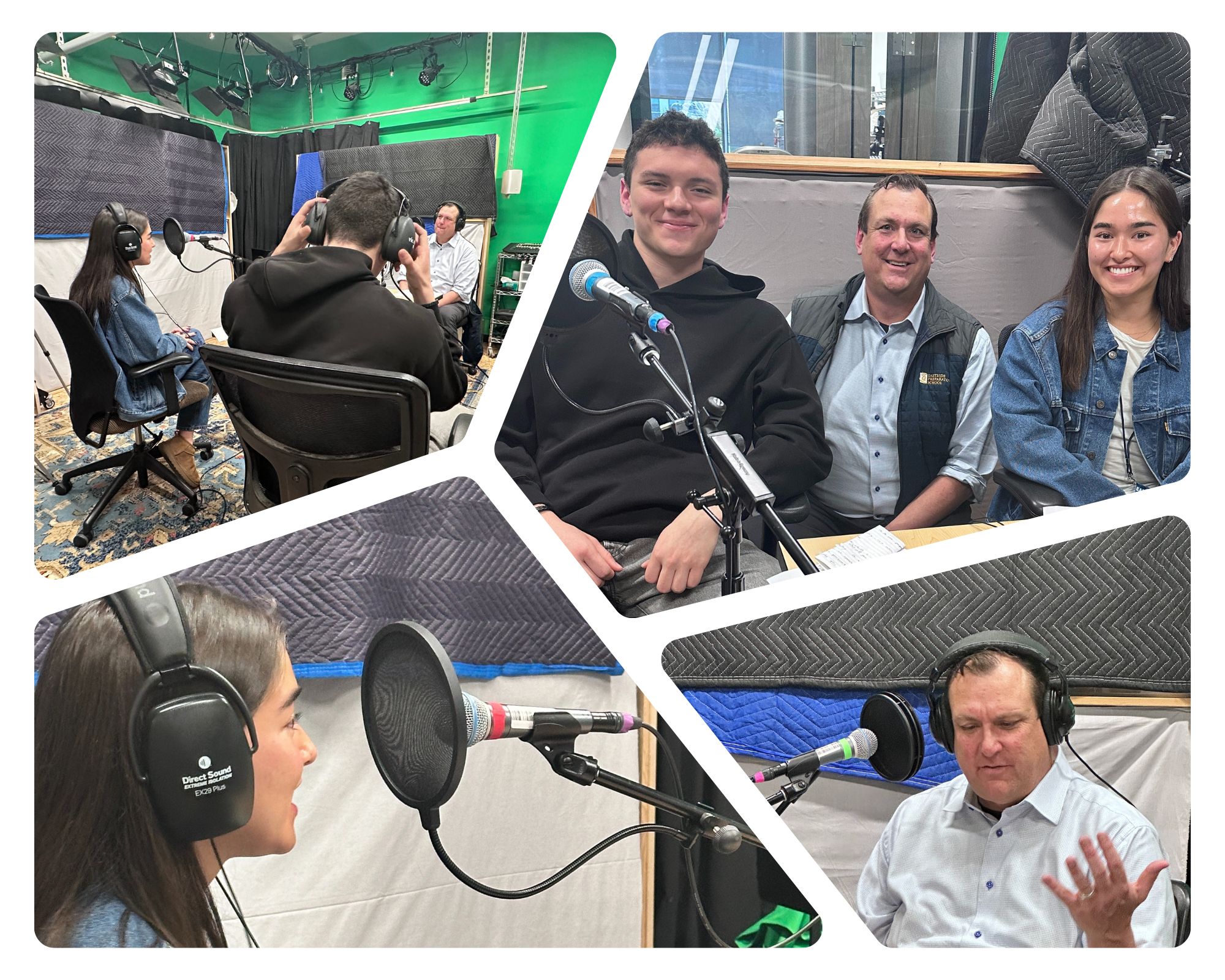
This episode, from EPS to what's Next? Alumni Reflections on Clarity, Care and Responsibility brings together two college age alumni to explore how their Eastside Prep experience continues to shape how they lead, communicate and make thoughtful decisions in the wider world.
Through stories from college and everyday life, they reflect on what it means to take responsible action with clarity and care.
First up, we're joined by Lorenzo da Fiano, a 2024 Eastside Prep graduate, now studying international relations at Loyola Marymount University. With a minor in philosophy, Lorenzo's passion for ethics, global engagement and responsible citizenship shines through both his academic pursuits and his personal interests, whether he's writing, reading, staying active, or exploring new cultures through travel.
Lorenzo, great to have you back.
[00:01:20] Speaker B: Great to be here. Thank you so much. I'm excited.
[00:01:22] Speaker A: Absolutely wonderful.
And next we welco welcome Josie Cranick. Also a 2024 Eastside Prep graduate and currently majoring in Business Marketing at Loyola Marymount University.
Josie brings a spirit of curiosity and creativity to everything she does, from her studies to her adventures around Los Angeles. She loves spending time at the beach, discovering local food spots and connecting with friends at the farmer's market.
Josie's sense of community and balance truly reflects the values of thoughtful, responsible action. We celebrate at eps.
Welcome back.
[00:02:00] Speaker C: Thank you. I'm so excited to be here.
[00:02:02] Speaker A: Oh, it's so wonderful to catch up. So let's jump right in. What is a moment in college or post EPS life where you thought this is not the sandbox anymore and how did you handle that?
[00:02:15] Speaker B: The first moment, I think I felt that expansion of your world where everything's kind of just blown into this. Oh, like there's more people in the world than just the 500 and so people that you know exist at EPS and your parents and the people you see on vacation and whatnot was when I walked into my first big lecture hall and there was more people in that lecture hall than our entire community here at eps.
[00:02:36] Speaker A: Oh, wow.
[00:02:36] Speaker B: For a class that I had that one there and then two the next semester and it was that same lecture room that had about 600 people in it. And this is just for a basic international relations like intro level class. And seeing that, oh, that's one class at this college completely changed my idea of what community meant. That's a moment I always think back to because I felt very small in that moment. But also in a way where like pressures lifted a bit. This isn't necessarily such a scary place because there's so many people. But then also, you know, it influenced later what I wanted to see from my college experience. But that's the first moment I felt that experience.
[00:03:12] Speaker C: Josie I feel like for me, my first, whoa, I'm not in a little sandbox anymore was probably when I first got to college and I said goodbye to my parents and I was kind of just like, I am fully on my own right now. And I feel like after like the first week of school and I had gone through all of my classes and had done all my work and by like the morning and I would have the entire afternoon and I was like, I need to start getting involved in a few things because I just have so much time on my hands to not having that structured schedule that I was used to. You go to class, you have your afternoon commitments, sports and things like that, and then you go home and do homework and have dinner and do it all again the next day.
[00:03:47] Speaker A: How did you feel at first and then did you come to sort of appreciate it even more as you got used to that?
[00:03:53] Speaker C: I feel like for me at first I felt a little bit awkward because I was just like in high school I was so involved in so many different things and I like, I'm a person that likes routine and so I was just like, I don't really like the feeling of having like nothing to do and just feeling a little bit bored almost. And I also was just like, I want to be a part of the LMU community. I want to make a meaningful college experience for myself. So I feel like for me, I mean, it wasn't even much of a wake up call because I was only in my first week of school, but I was just like, I want to make my college experience meaningful. So I think after that I really made it a point to get involved.
[00:04:27] Speaker B: Into a few as far as filling my routine up. I think that changed drastically more recently. It's been self development, just how can I, like, water my own plant? That's the best way I can put it. To see what I'm made of and understand who I am. And I think the best way of doing that is like, oh, what do I want to do? I know there's a lot of pressures from like friends and stuff like that and social settings, but what does my day to day look like? How can I do that? And that comes through many ways of seeing the People that I obviously really care about, but like filling time for sports activity, reading, your own pursuit of education in your own sense. And I think that that's like the best way that I've been using my time recently.
[00:05:01] Speaker A: I, I really appreciate that. So the founding head of the school, who you all know, Dr. Terry Macaluso, had long asked this question about school schedules and thinking about how it's ostensibly the same structure for a 10 year old to an 18 year old. And so we're actually engaged in a process these last couple years and maybe trying to ease that experience of like your scheduled schedule scheduled and then you arrive and now you're on your own and not because you can't handle it. Like I'm sure at first it was like whoa. But then you figure it out, but more so that you're able to take greater advantage sooner when you get to the next step. And so thinking about how we mess with time and space a little bit for our 11th and 12th graders is something we're working on.
So, Lorenzo.
[00:05:46] Speaker B: Yes.
[00:05:47] Speaker A: What's a random skill or mindset that you just kind of picked up at EPS that turned out to be way more useful than expected?
[00:05:54] Speaker B: I'd say accountability.
I think that comes up in a random sense because you know, you're not sitting in accountability class and you're not doing this. But it's, I think, the most valuable thing that I picked up at eps because the community size means you have to show up for people. Like you are in the same space. You're sharing food, you're sharing time together, you're sharing space, you're sharing everything with these people so intimately for so long. And I think that forces you to either rise to the challenge or, you know, reason with the challenge. But I think accountability is what I gained the most because you have to show up for people, you have to depend on yourself. And when you don't, it's not about being a failure, it's how can I learn from this? What can I learn from this? And you adapt because of that. But accountability in the sense like you have to hold yourself to a certain standard because the people around you deserve that. And I think that's like, I wouldn't have learned that the same way without having gone to eps.
[00:06:43] Speaker A: I appreciate that. Yeah. It makes me think, what are all the classes that weren't classes like you wouldn't take accountability, that would be silly or wouldn't work very well. But it's something that is gleaned, it's something that's picked up and there's a whole host of skills like that. So, Josie, have you ever had to speak up or clarify something or set a boundary in a way that felt very EPS to you? In that instance, what happened and what did you learn from it?
[00:07:06] Speaker C: I feel like an instance that comes to mind almost immediately is the conversations I've been having to have with my roommates, especially living in an on campus apartment. I live with my current roommate from my freshman year, who I get along really great with. And then we went random. We matched with two other girls, and they're great. Lovely with that. We just all living together and not really knowing each other. It's definitely some issues have come up, especially in terms of who gets what space in the fridge. Like, do we all have the same preferences of when people come over, who's gonna clean and do what? And I feel like, for me, my roommate, she definitely had some quarrels with our other roommates. And I kind of had more of a role where I was. I'm in a space where I don't have to say anything. It kind of feels like we can cut the tension with a knife. So I was like, I feel like it would be better if I did say, speak up and make things a little bit better just because of how tense things were getting and how hard it can be navigating having roommates in college.
[00:08:01] Speaker A: That is not easy, really, to have that confidence and to have that ability to say, hey, y', all, it sounds like you took it head on.
[00:08:08] Speaker C: Yeah, definitely.
[00:08:10] Speaker A: Well done. Was there a moment when you didn't lead with care or clarity and totally felt the consequences afterward? What would you do differently now?
[00:08:20] Speaker B: I love what Josie just said because I think this relates heavily to this next situation, is there's always those opportunities to speak up. I think that we as humans, you know, we know that there's this underlying situation, but we both maybe fear saying something, and that often can actually damage so much the lack of action, the inaction that exists in that space. There's moments like these that happen all the time and throughout my life. And a recent one is through a situation with a friend where I felt like I was casting judgment just, like, subconsciously, and I was making these, like, large understandings about their life. I took a second, I was like, why am I doing this? I know nothing about what it's like to live this person's life. What I felt in that moment afterwards was not necessarily a guilt because I think, like, we're all doing life for the first time. Like, you know, we're trying our best, but I think that it was a wake up call to be like, you know, make it right with the person, go and actually talk to the person. And what would I do differently now? I guess like I did, I just went and we sat down and we worked it out. And it was like we had both been kind of subconsciously judging each other without addressing the situation.
And so much of that is just like, not real. All those thoughts are just like, not real to what's like actually going on in the main situation. And you can only really get that once you connect, once you branch and once you close that gap. So closing that gap made everything just like 10 times better. And all that stuff that we had both been thinking about, first of all, we both related to the fact that we were doing the same thing without even realizing it. And then so much becomes so much clearer once you take away that lens, that the brain just tries to trick you a little bit and that there's so much going on when there's really nothing that serious going on in the.
[00:09:51] Speaker A: Real sense when you finally have that conversation. I have taken this thing and made it either way bigger or way different. And then in my mind I'm like, I wish we just sat down sooner.
[00:10:01] Speaker B: People mean well. Yeah. We make up these images of people in ourselves, in our brain. And like, if you actually hear yourself out, I think first give yourself the grace of. It's my again. It's my first time doing this, like, life, whole life thing, you know, like, let's be more gentle with ourselves. You can then extend that to other people. But most of the time people are just either like, confused or they get caught up on the ego and that lets them, like, you know, hurt other people. But I think they mean well most of the time.
[00:10:24] Speaker A: Or they're just afraid. Yeah, you know, just there's like fear.
[00:10:28] Speaker B: Running through the self conscious of something. Yeah.
[00:10:30] Speaker C: I feel like so many things can be fixed with just a conversation. Then you both have it and you're just like, oh, like, wait, that wasn't that bad. That wasn't that scary. It's a much smaller problem than we thought it was.
[00:10:41] Speaker A: Chelsea, how did EPS prepare you for when you have to work with other people, with groups or, you know, different team dynamics?
[00:10:49] Speaker C: I feel like EPS prepared me really, really well for working in a lot of different group settings and being able to work with different personalities as well. It's really great to know that you're a little piece in, like, this whole big puzzle, but you still have a role and if being supportive, that's still just as an important role as being, like, maybe the star on the team.
[00:11:08] Speaker A: Can you remind our listener what the SLC is? And can you describe your role in the SLC while you were here?
[00:11:14] Speaker C: Yes. The SLC is the Student Leadership Council. I was the Community Outreach chair. I basically was in charge of running the Instagram.
[00:11:21] Speaker A: Oh, fun.
[00:11:22] Speaker C: We did a lot of work in assembly too, doing, like, minute to win it games, but just making sure that the overall EPS student body was happy and having a good time.
[00:11:30] Speaker A: Lorenzo, what's something you wish people were clearer about in college but no one actually teaches you?
[00:11:37] Speaker B: We're all doing our best to do the thing that we're in college to do. And that can be so many different things. For some people I've come across, it's just a social space, which to me was a huge shock. For other people, it's the end all, be all. They're there to get things done and leave because they need to get things done. And there's a whole spectrum in between. A lot of times we get caught up in these buzzwords of internship and all this stuff, and they're important, they're crucial, but we're all there to develop as people. That's ultimately what it is. It's the next phase of development in our lives. If we shared a little bit of grace and humility to everyone else, but most importantly ourselves to begin with, I think we would all be able to get to the root of it quicker and maybe even help each other better. Because I think now more than ever, we're further away from each other than we have been in a long time. In many ways.
[00:12:22] Speaker A: Is there a cause or practice you found yourself caring about in a new way since graduating? And what sparked that interest, a cause.
[00:12:30] Speaker C: That I found myself caring a lot more about since graduating, is an organization called Baby2Baby. I had the opportunity of interning for Baby2Baby my freshman fall as a community engagement intern. So I was helping lead a lot of their volunteer sessions. And the holiday season is typically a really busy time. That's when they have all of their back to school events, Thanksgiving events, and also Christmas and Hanukkah events. It's a nonprofit that helps moms and newborns living in poverty. So baby 2 baby aims to get moms and newborns brand new items. I found their work really meaningful and also inspiring that it's a team of mostly women, which I found was especially cool.
[00:13:09] Speaker B: I think forgiveness is the main one, but I think that starts with forgiving yourself for a lot of things. And I think this is kind of just like a human existence kind of perspective I've developed. We're so much better at looking at what we don't do than what we do actually accomplish. Through forgiveness for yourself, you can then forgive anyone. You're your own harshest critic and you hold yourself to this like, unreasonable standard. But if you can corral that and cradle that internal dialogue that sometimes beats up on you, you can then extend that grace to anyone. Forgiveness is just a practice that again, it's like almost one of those things. Like, why isn't there a course called Forgiveness? There's been nothing more important to me than that recently.
[00:13:42] Speaker A: If you could send one piece of advice or encouragement back to your EPS self or to our current students, what would it be?
[00:13:50] Speaker C: The piece of advice would to be to just be where my feet are planted. My junior and senior year, I started to worry so much about college and think so much about what my life would be like in college that I wish I was a bit more present. I think I would just tell myself to have fun and relax and just trust that everything's going to be okay.
[00:14:08] Speaker B: Be where your feet are is great. You're going to get into college. Don't freak out. Like you're going to be all right.
[00:14:15] Speaker A: It's going to.
[00:14:15] Speaker B: I think you see these things and you're like, oh my God, like all these applications. Am I going to get in anywhere? Like you will if that's what you want. Maybe not everyone looks at a four year college and that's not what suits them. But trust yourself. Like you can be great. And if I could go back and have that one on one, I'd just be like, bet on yourself, trust on yourself. But also have fun in the meantime.
[00:14:32] Speaker A: So here's a couple things I'm going to walk away with. Keeping your feet planted or just being so future focused that you just don't enjoy the here and now, but also the vision of what kind of garden do you want to have? I appreciate it so much. Thank you for being here.
[00:14:45] Speaker B: Thank you.
[00:14:45] Speaker C: Thank you for having us as eagles for life.
[00:14:48] Speaker A: Please come back.
It's clear that the values of clarity, care and responsibility do not end on graduation day. They grow and evolve as students step into new spaces and challenges.
Thanks so much for listening to insightful questions and we'll see you next time for more insights. Be sure to check out the EPS Weekly news every Friday.
[00:15:12] Speaker C: Sam.